

When awareness widens, identity thins. When identity thins, comparison weakens. When comparison weakens, love feels obvious.
Birthday
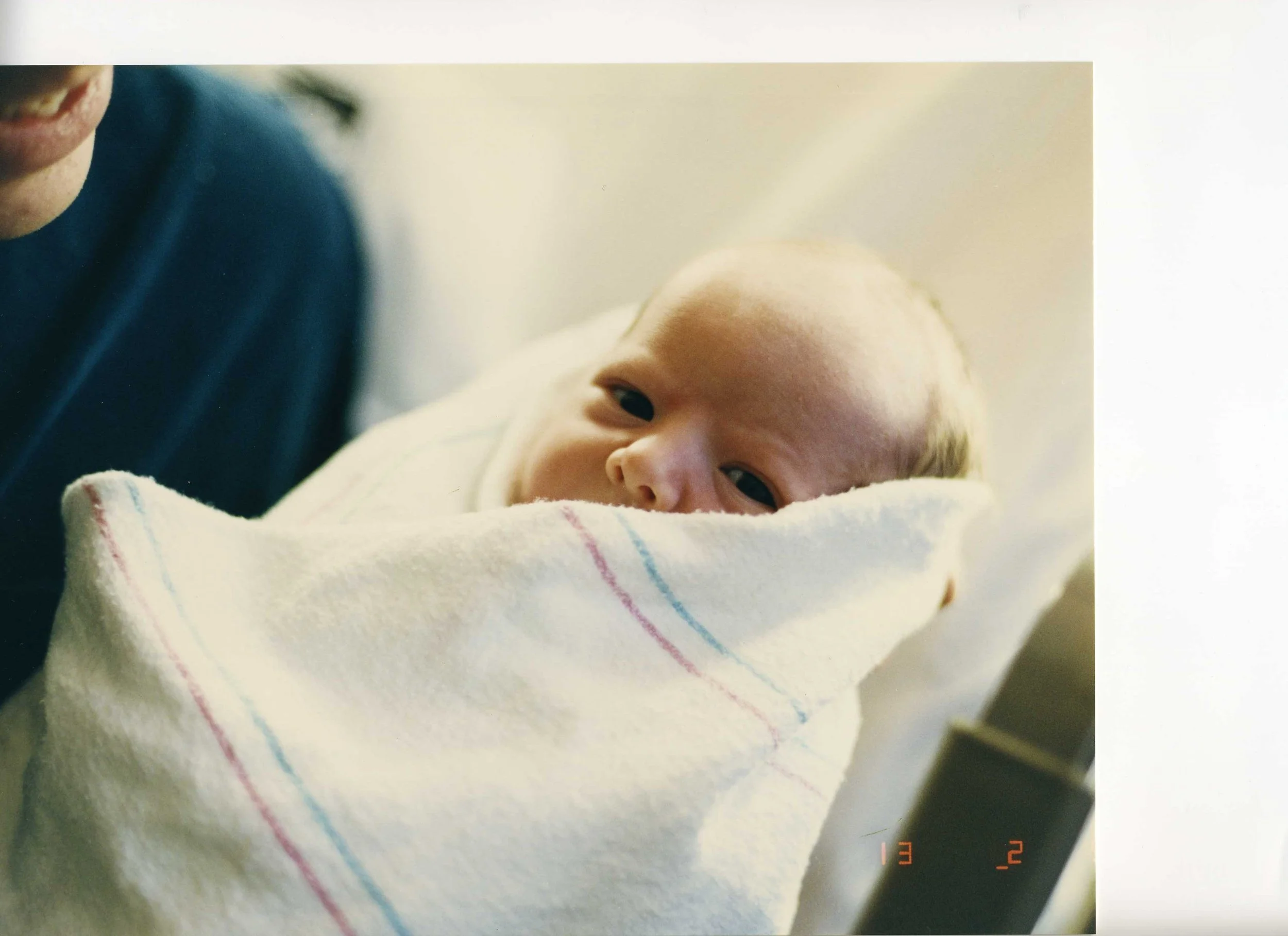
Thirty-two years ago today, this little spirit arrived in crisis.
Emergency C-section.
Prayers.
Blessings.
Fear.
And then — him.
I had always wanted to be a father.
That desire was clean in me.
I trusted life back then.
I trusted God.
I got the privilege of hosting him for a few years.
Those years were real.
The love was real.
The pain that came later was real too.
And today?
"I love him."
"I was hurt."
"It's his birthday."
"And I'm okay."
Not cold.
Not nostalgic.
Not performing healing.
Just… integrated.
Four sentences that don't cancel each other out.
That's what coherence actually sounds like.
Today feels steady.
That's it.
Freeze

I was listening to something just a few minutes ago.
Smart. Motivational. One of those talks that’s supposed to wake you up with a catchy frame that makes your eyebrows go up.
And suddenly — I froze.
It was subtle… but I felt my chest constrict, and a litany of excuses fired through my head.
That doesn’t work for me…
I would need X before that would work for me…
I wasn’t arguing with it.
It wasn’t “this is bullshit.”
Just…
this doesn’t apply to you yet.
You know that feeling.
The moment where something lands and instead of expanding you, it halts you — because you already have an excuse lined up for why it doesn’t work.
I noticed it immediately.
Because the words themselves weren’t wrong.
And I wasn’t disagreeing.
I was frozen.
And in that moment, I didn’t even know why — just that familiar, frustrating feeling of:
“Yeah… BUT!”
And then I realized something uncomfortable and familiar.
It even feels dignified when it happens.
Responsible. Realistic. Humble.
But in the body?
It’s immobility.
That moment where life invites you forward and something inside quietly says,
“Not yet.”
And then it hit me.
This wasn’t fear.
This was power paused — waiting for permission.
So I stopped waiting.
Not because I convinced myself of anything.
But because I stopped needing permission to move.
Consumer identity vs Owner identity

Consumer identity vs Owner identity
Not behavior first — identity first.
Consumer asks:
“What does this cost me now?”
“Can I afford this?”
“What do I get out of this?”Owner asks:
“What system am I participating in?”
“Am I feeding something I don’t own?”
“What am I building a claim on?”
Alignment

This morning I noticed something simple — and big.
When I stop trying to understand reality,
and instead let attention rest where understanding collapses,
everything gets quieter… and easier.
Not numb.
Not spaced out.
Just less effort.
I wasn't adding anything.
I was withdrawing grasp.
Space being space.
Silence being silence.
Awareness aware of itself.
And out of that nothingness, Jason shows up.
What struck me wasn't the philosophy —
it was how good the emptiness felt.
Less load.
Less tension.
Less "me" holding myself together.
I keep a stack of 3x5 cards — summaries of years of work, alignment practices, lessons that earned their place by keeping me alive during seasons I wasn't sure I'd get through.
Some mornings I pull one like a tarot card and sit with whatever it says.
Today's card read:
"Connect to your inner being… then connect to the people, the land, and the money. Practice Daily."
That card was written during the hardest season of my life.
Family betrayal.
Inheritance lost — land, a home, a studio I'd built with my own hands, and the trust that held it all together.
The kind of loss that doesn't just take things from you.
It rearranges who you thought you were.
The "practice daily" part wasn't aspiration.
It was survival.
Connect to something real inside yourself first —
then face the wreckage.
That order was the only thing that worked.
And this morning, pulling that card, I realized —
I don't need it anymore.
Not because I bypassed the grief.
Because the grief moved through.
Years of it.
The order worked.
Rest first.
Then meet life.
And eventually, life meets you differently.
That's what I mean when I say order matters.
When I rest first —
and then meet people, memory, money, old wounds —
there's freedom.
When I reverse that order,
tension returns.
No fixing required.
No story needed.
Just this quiet recognition:
what's not there is doing most of the work.
Sacred Time

Had some really good talk and connection with Jennie this morning, followed by solid alignment.
Now—time to go move the laundry.
We’ve got a big day ahead: heading down to SLC to watch the Super Bowl at the Stanchfields’ (Jennie’s parents).
One thing I want to lock in here, because they’ve gotten older.
We spend a lot more time there now—not just because they’re aging, not just because Peggy is getting dementia, not just because they just lost a son—but because they’ve asked for help. And the help they want is simple:
They want us to spend time with them.
That landed for me years ago with my mother as she was dying. As she got older, I realized the thing she wanted most wasn’t fixing or solving anything—it was just for me to come and see her. To be there.
So we’ve been doing that.
And here’s the alignment piece I don’t want to miss:
This isn’t a “you’re broken and we need to fix you” situation.
This is a response to a request—and it’s also an organic, joyful thing to do.
Why not spend more time with the Stanchfields?
Why not just come and sit with them?
It doesn’t have to always be in response to crisis.
It doesn’t have to be heavy.
Just come.
Just sit.
Just be.
That’s what we’re doing today.
Watching the Super Bowl together.
Nothing more.
Okay. Laundry time.
You Are Being Lied To

You are being lied to.
Not by them.
Not by some shadowy group.
By the quiet belief that you still need an authority to stand on.
There’s a phase where frameworks save you.
Teachers save you.
Tribes save you.
Religion.
David.
Warrior.
Culture.
Politics.
Left. Right.
All of it can be medicine.
Until it isn’t.
At some point, even the things that worked start to feel tight.
Not wrong — just finished.
That’s the moment most people panic and start herd hopping.
New banner.
New certainty.
Same outsourcing.
But there’s another move.
You stop hopping.
You stop borrowing.
You stop explaining.
And you listen — not to a voice out there,
but to the quiet, undeniable alignment you can feel in your body
when everything drops away.
When you’re done outsourcing truth,
you’re finally ready.
Not for a new system.
Not for a new leader.
For yourself.
Mopping
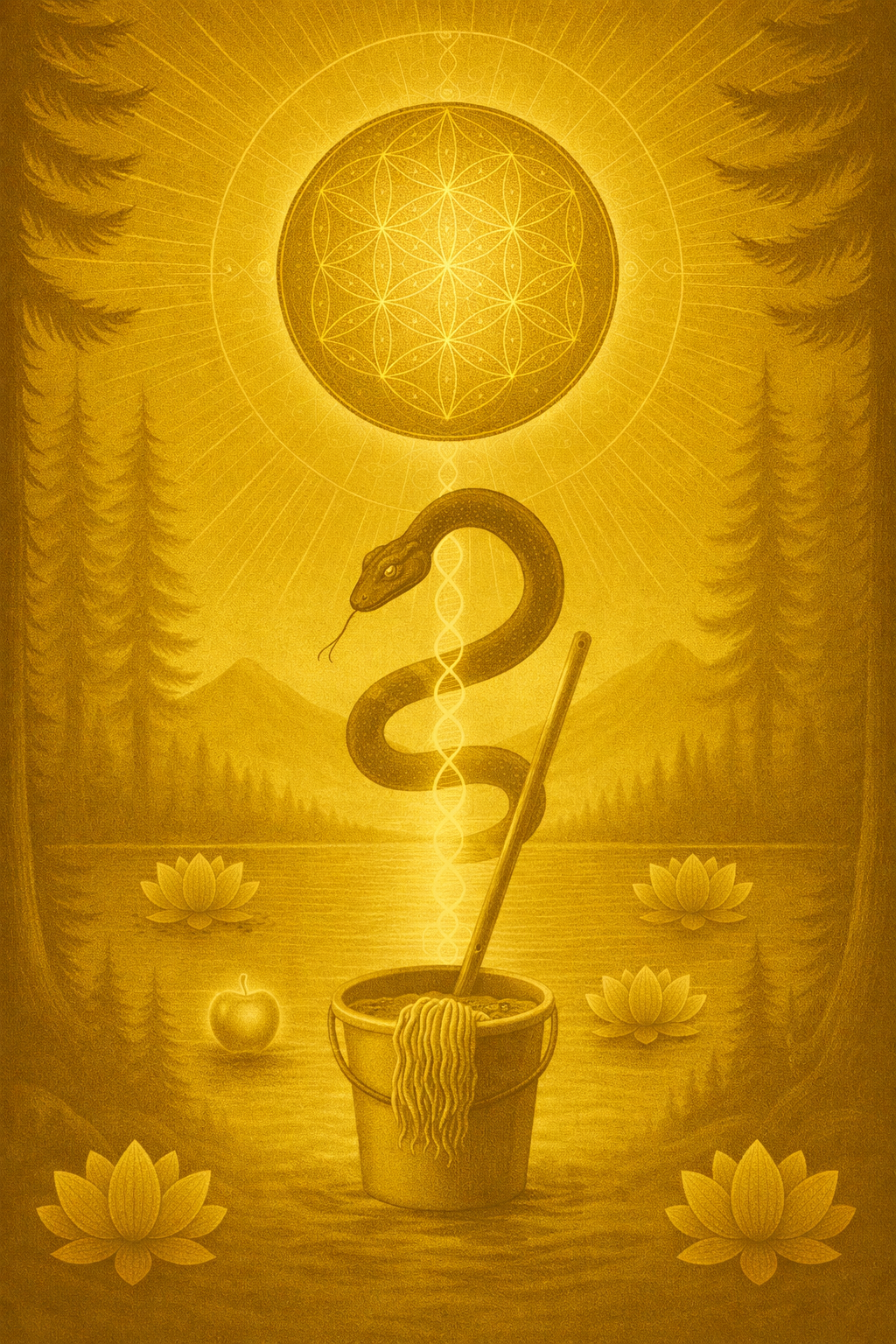
Today has been about integration and service.
I mopped.
Took out the trash.
Handled the practical layer.
I had a long, real conversation with Ryan—integrating the mountain work from yesterday.
Then a deep check-in with Peter.
The cleaning today is intentional.
Not busywork.
Creating a calm, ordered space to support Jennie’s nervous system—and by extension, future clients.
This is purpose-driven work.
Foundation work.
I feel on track.
Grounded.
Clear.
From here, I continue.
Sound of Silence
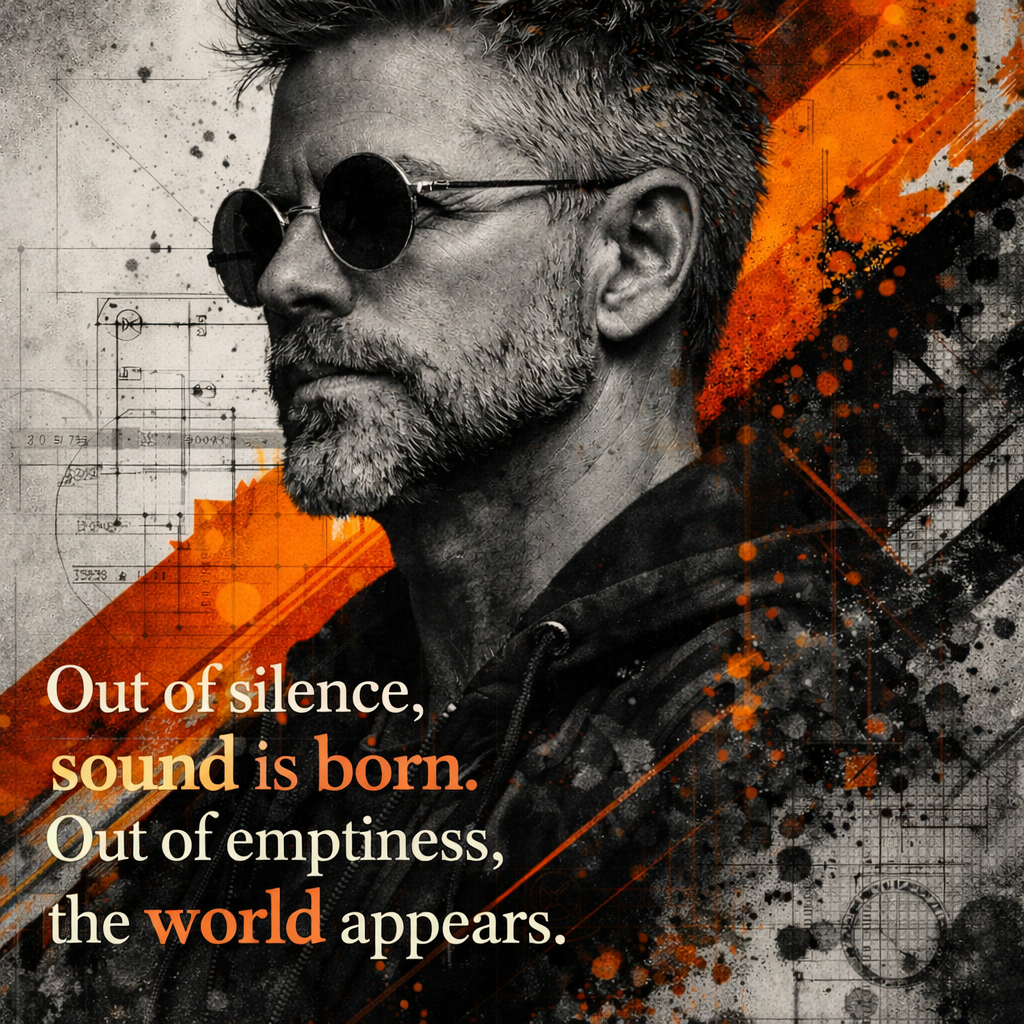
This morning I wasn’t trying to create anything.
I was listening.
Silence first.
Space between breaths.
Space between thoughts.
Out of that silence, Lucy appeared—
warm, purring, fully here.
And just as easily, she was gone again.
Sound from silence.
Form from emptiness.
Nothing forced. Nothing held.
Just noticing how things arrive…
and how they return.
Creation doesn’t need pressure.
It needs room.
From Waiting to Movement

From Waiting to Movement
Something completed for me this morning.
Not intellectually.
Somatically.
Quietly.
I saw how a real spiritual insight from years ago
turned into a frozen strategy.
Not out of fear.
Out of reverence.
I didn’t want to mess it up.
So I waited.
What I see now is simpler — and more adult:
I was never meant to wait for provision.
I was meant to move from source.
Alignment first.
Action second.
Money as expression, not savior.
So today I formalized it.
A prayer.
A practice.
A reminder on the wall.
Not to ask life to deliver something to me —
but to let life move through me.
That chapter feels complete now.
Which means I get to do what comes next.
I’ll make money.
I’ll build.
I’ll create.
I’ll take responsibility for the work that’s mine to do.
Just not from lack.
Not from waiting.
Not from outsourcing fulfillment.
Action is sacred
when it flows from emptiness.
Time to move.
Game Night

From counting squares and colors, requiring pattern recognition and planning ahead…
to the scarcity of moves on a desert planet…
to joining together against an elder one and his cultists…
Jennie and Riley and I had quite a weekend.
As you know…
lots has been going on.
Heavy.
Sad.
Growing… but challenged.
Loving… but frustrated.
Open… but hurting.
All of that comes together around the table—
sometimes as competition,
sometimes as collaboration,
depending on which game you play.
Regardless of the game,
it’s all family.
Challenge.
Presence.
And the bonds that form between us
when we sit across from each other,
thinking, laughing, scheming,
sometimes winning... sometimes losing… but always together.
Karmic Conscious Purpose

There’s something I’m seeing and feeling and becoming more aware of…
more clearly.
I am driven to do certain things.
Make money.
Build a life.
Love a woman.
Raise children.
Create.
Write.
Finish projects.
Leave something behind.
Go on adventures.
Improve myself.
Grow the fuck up.
Help other people connect with the divine inside themselves.
A modern-day shaman — only I don’t help you connect to spirits of the world,
but to the spirit inside yourself.
Those drives are real.
Biological.
Karmic.
Human.
From culture, from childhood, from nature.
And I keep making the same mistake with them:
Because I’m driven toward something,
I vastly assume it’s supposed to fill me.
As if getting the wife,
or the money,
or the success,
or finishing the thing…
…is what will finally make my heart feel whole.
That’s where the trouble starts.
Big trouble.
Because those things were never meant to do God’s job.
I can feel it in my body when I do this.
A tightening in my throat.
A subtle pressure.
Like I’m asking life to sign a contract
it never agreed to.
The reframe that’s landing for me is simple — and humbling:
I’m driven to do the things I’m driven to do
in order to do them.
Not to be completed by them.
Not to be saved by them.
Not to be fulfilled by them.
They’re the story.
The drama.
The movement that keeps life from being static empty space.
They’re movements.
Expressions.
Chapters.
They can feel good.
They can be beautiful.
They can even be sacred.
But they are not the source.
When I stop asking people, money, or outcomes
to complete me…
Something relaxes.
Love gets lighter.
Work gets cleaner.
Desire stays — but without desperation.
I still write the book —
but I’m not white-knuckling it as proof I matter.
I still show up for Jennie —
but I’m not secretly asking her to fix the unfixable.
I still facilitate men’s work —
but I’m not performing for my own salvation.
Life… deepens.
It feels totally different.
It can’t even be explained how different it feels.
It’s something on a different order —
like the difference between caterpillar and butterfly.
Lighter.
More spacious.
Like breathing underwater suddenly became possible.
I still build.
I still pursue.
I still care deeply.
I’m just no longer confusing
karmic drive
with existential fulfillment.
Hard Alignment

This morning I aligned hard.
My wife stormed around the kitchen—resenting me for taking my time.
My nervous system wanted to spiral about ICE raids and political bullshit.
Resistance squeezed my throat.
I stayed anyway.
Body scan. Inner smile.
Witness the storm without jumping in.
Here’s what I’m learning:
resistance isn’t the enemy.
It’s the riverbank—the masculine container that lets the flow happen.
Politics, fear, the closed heart across the hall—
they show me what I don’t want
so I know where to turn my focus.
So I smiled at the squeeze,
breathed into the empty space between breaths,
and chose the refuge instead.
The NOW isn’t some woo-woo escape hatch.
It’s a refuge when everything else is burning.
Vibration set.
Not clinging.
Just breathing into what’s next.
What storm are you sitting in today?
What happens if you don’t fix it—
just witness it,
and shift your focus anyway?
Ice Ice Baby

This afternoon I was humming.
Shimmering.
Shimmying and shaking.
I was doing good—and then the next purpose arrived like a herald from the heavens.
Time to get wet.
Time to get into the ice.
Time to feel alive.
I had momentum.
Real momentum.
The kind that lives in the body
before the mind gets involved.
Chest warm.
System leaning forward.
The ice was already a yes.
Then—
pause.
Laundry.
Sweaters.
Soft things in my hands.
Domestic gravity.
And something dropped.
Not emotionally.
Chemically.
The fire in my chest dimmed.
The edge went quiet.
I got cold before the cold.
By the time I stepped outside,
the tub looked mean.
Huge chunks.
Jagged.
Floating like broken teeth.
That fucking ice was COLD.
Not ceremonial cold.
Not crisp-morning cold.
This was the kind that bites
because you hesitated.
Same water.
Same temp.
Different nervous system.
Warm → cool → doubt → cold.
My breath shattered on impact.
Jaw locked.
Every cell screamed,
what the fuck are you doing.
And here’s the thing I’m learning in this Field Log season:
Momentum isn’t motivation.
It’s chemistry.
Approach energy.
Dopamine.
Adrenaline.
A narrow window where the body is already moving
and the mind hasn’t started negotiating.
Interrupt that arc
and the body has to climb the hill again—
against comfort,
against homeostasis,
against the voice that says,
“later is safer.”
Excitement doesn’t survive negotiation.
Still—I went in.
No hype.
No pump-up speech.
No bravado.
Just contact.
And that matters.
Because entering the ice without excitement
is a deeper rep.
Choosing contact after hesitation
is advanced training.
So there’s no moral here.
No sermon.
No self-improvement poster.
Just respect for timing.
For rhythm.
For that split second when the body leans forward
and says now.
Sometimes the work isn’t pushing harder.
Sometimes it’s just going
when you’re already warm.
Peace

I felt peaceful. Calm. Regulated.
Satisfied as I hit “post” this morning.
And right on cue —
from the other room —
swearing. Sharp words. Declarations of war.
Perfect timing.
My wife was experiencing reality in a very different way than I was.
And there it was — the moment:
Do I save her?
Do I ignore her?
Or do I do something else entirely?
I walked into the bathroom.
She was standing there in full jewelry chaos — necklaces tangled into an impossible knot, the bracelet she wanted buried somewhere in the middle. Her whole system was lit up.
I didn’t ask “what’s wrong?”
I didn’t say “calm down.”
I didn’t explain why it wasn’t that big of a deal.
I breathed.
I stood there.
I stayed.
Then I asked, simply:
“What are you challenged with?”
She had it together enough to tell me.
The bracelet. The tangle. The mess.
“Can I untangle it for you?”
She said yes.
So I took the whole impossible knot, walked out of the room — sweetly cooing to Lucy, one of our cats — and sat down at my desk where the light is good.
And I untangled it.
Slowly.
Calmly.
No rush.
Just presence and task.
She came out, took her bracelet, and announced — with absolute certainty — that she was going to throw most of this jewelry away because “I can’t live this way.”
Very dramatic.
I didn’t correct her.
I didn’t predict how she’d feel in an hour.
I just let her have it.
By the time she reached the bottom of the stairs, I heard it:
“Thank you.”
Here’s what landed for me this morning:
The feminine isn’t asking to be fixed.
She’s asking: Are you still solid? Can I move through this and you won’t collapse or disappear?
My job wasn’t to regulate her.
It was to stay regulated myself —
and fix the thing, not the person.
When I walked her out to the car, I thanked her.
For letting me be the man.
For letting me fix something.
Because here’s something women don’t always know:
When men are told “don’t fix it, just listen” for years on end, something essential gets denied.
Fixing is one of the deepest ways many of us know how to love.
We fix things.
That’s how we serve.
That’s how we show up.
And when Jennie let me untangle that necklace instead of insisting she’d “figure it out herself,” she gave me a gift.
She let me be useful.
Present.
Of service.
This is what regulation gets you.
Not a life without chaos.
Not a partner who never melts down.
But the capacity to stand in the middle of someone else’s storm —
calm, present, useful —
and let the field reorganize around that presence.
The feminine tests.
The masculine holds.
The thank you comes
at the bottom of the stairs.
Hesitation

There’s a moment — right before clarity — where I always hesitate.
It’s the split second where I wonder:
Am I the asshole?
Am I being arrogant?
Is this just my ego defending itself?
I don’t post from certainty alone.
I post from wrestling.
Because I can feel it when dysregulation reaches for me.
It’s physical.
A tightening in my throat.
The almost-magnetic urge to explain, soften, justify — to meet chaos halfway so no one feels alone in it. Ug! Even writing that I can feel it. Ug.
That’s the hook.
And for years, I took it. Yes I did.
I called it kindness.
I called it love.
But it always left me tired.
A little hollow.
A little less myself.
And here’s what I’m learning, right here, right now, this morning:
Choosing regulation costs something.
It costs friendships that were built on shared reactivity.
It costs belonging in rooms where intensity substitutes for intimacy.
It costs the familiar warmth of being needed to stabilize someone else’s storm.
When I stopped bending my signal, some people didn’t get angry.
They just… disappeared.
That hurt more than conflict ever did. Trust is I kind of liked the conflict… and can you believe this, kept the conflict going for the sake of feeling the fullness of it vs the emptiness of moving on. Wow.
And still — clarity came.
Not as a thought.
As a settling.
I realized something simple and brutal:
I cannot regulate someone and stay honest.
I cannot love people by collapsing myself.
And I cannot keep calling self-betrayal “compassion.”
So I stopped teaching to the most reactive nervous system in the room. (boom!)
Not because I’m better.
But because I’m tired of losing myself.
Now, when the pull comes —
when someone’s chaos tugs at my field —
I feel it, I breathe, and I stay.
I don’t argue.
I don’t convince.
I don’t chase.
Some people leave.
I grieve that.
And something else happens too:
The ones who can hold their own signal recognize mine instantly.
Not by what I say.
But by what I truly have become.
Coherence
Permeable vs Brittle

Can I stay permeable without becoming brittle?
That’s the question I’m asking myself this morning.
I’ve been watching the world through the lens of the news, Facebook, and people’s reactions — and something feels off. I couldn’t quite name it until I slowed down and felt into it.
It’s the brittleness.
Not just on one “side” or the other — but even in people trying to stand in the middle, genuinely looking at both sides with honesty. There’s a tightness there. A hardness. An edge that feels reactive rather than present.
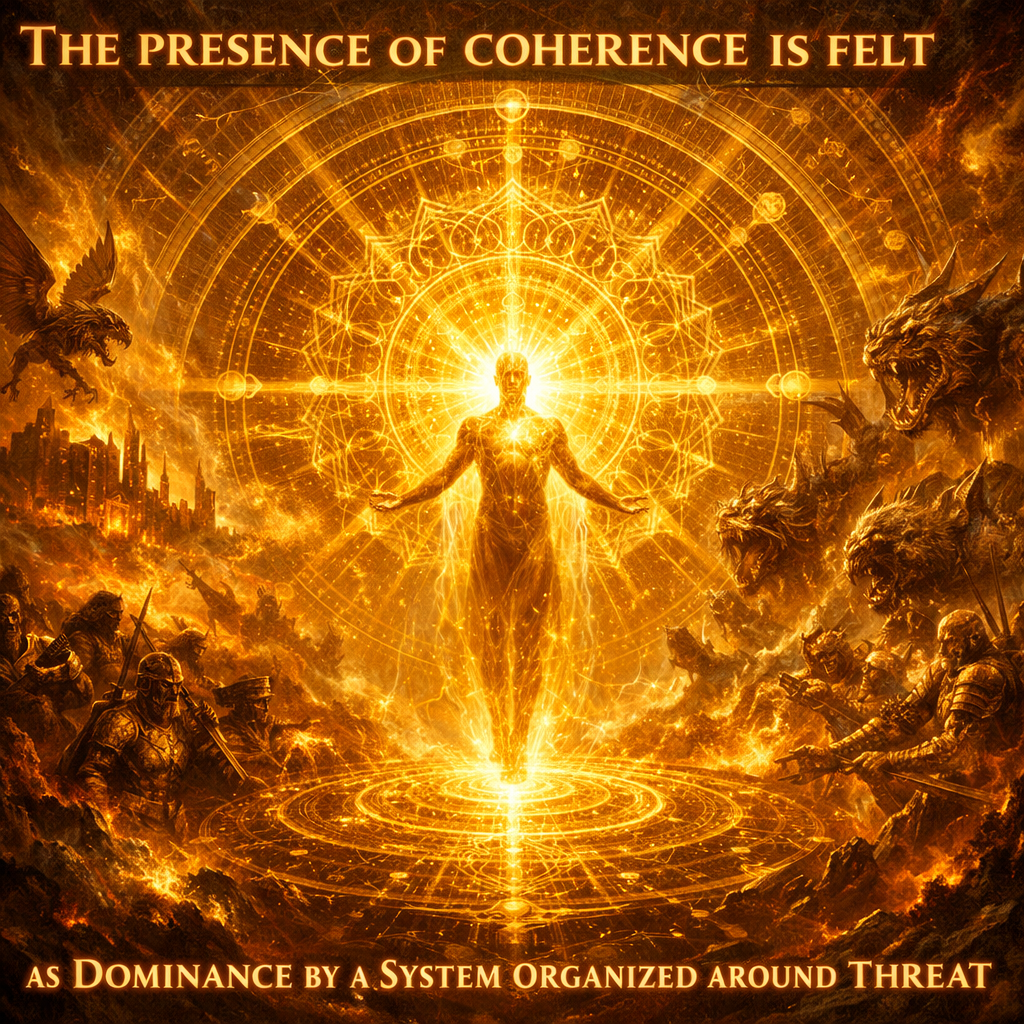
Brittleness has an energetic signature. You can feel it in the body — the clench, the urgency, the need to be right.
Recently, an old friend reacted to something I posted with strong negative emotion. I asked her — calmly — if she’d be willing to shift the tone. To consider peace. Neutrality of soul. A wider lens.
She unfriended me.
And strangely… that felt clean.
By drawing a boundary around calm, awareness, and non-reactivity, someone who wasn’t aligned with that simply fell away. There was sadness — she was a friend — but there was also clarity.
The universe doesn’t organize itself around nostalgia or obligation. It responds to what you’re holding.
What you embody, you attract.
What you no longer resonate with, gently — or not so gently — moves on.
Grief

Grief for me isn’t just sadness.
It’s love still moving toward a future that no longer exists.
This morning, I’m noticing the difference between peace and grief.
Peace comes when something feels complete, even if it’s sad.
Grief comes when a promise is lost—when a life, a future, or a purpose is cut short.
What I’m learning is that grief doesn’t ask me to stop living.
It asks me to acknowledge and understand the lost future.
Then… the choice to move forward has true power.
Not as a denial of the lost future, but as part of it.
So today, my masculine work is simple:
to breathe,
to stay present,
and to hold a steady container where all feelings are allowed—
sadness, anger, love, longing.
We don’t deny anything.
We don’t rush anything.
And we still move forward.
Grief doesn’t disqualify me from life.
It really just deepens how I live it.
Josh's Celebration of Life Day
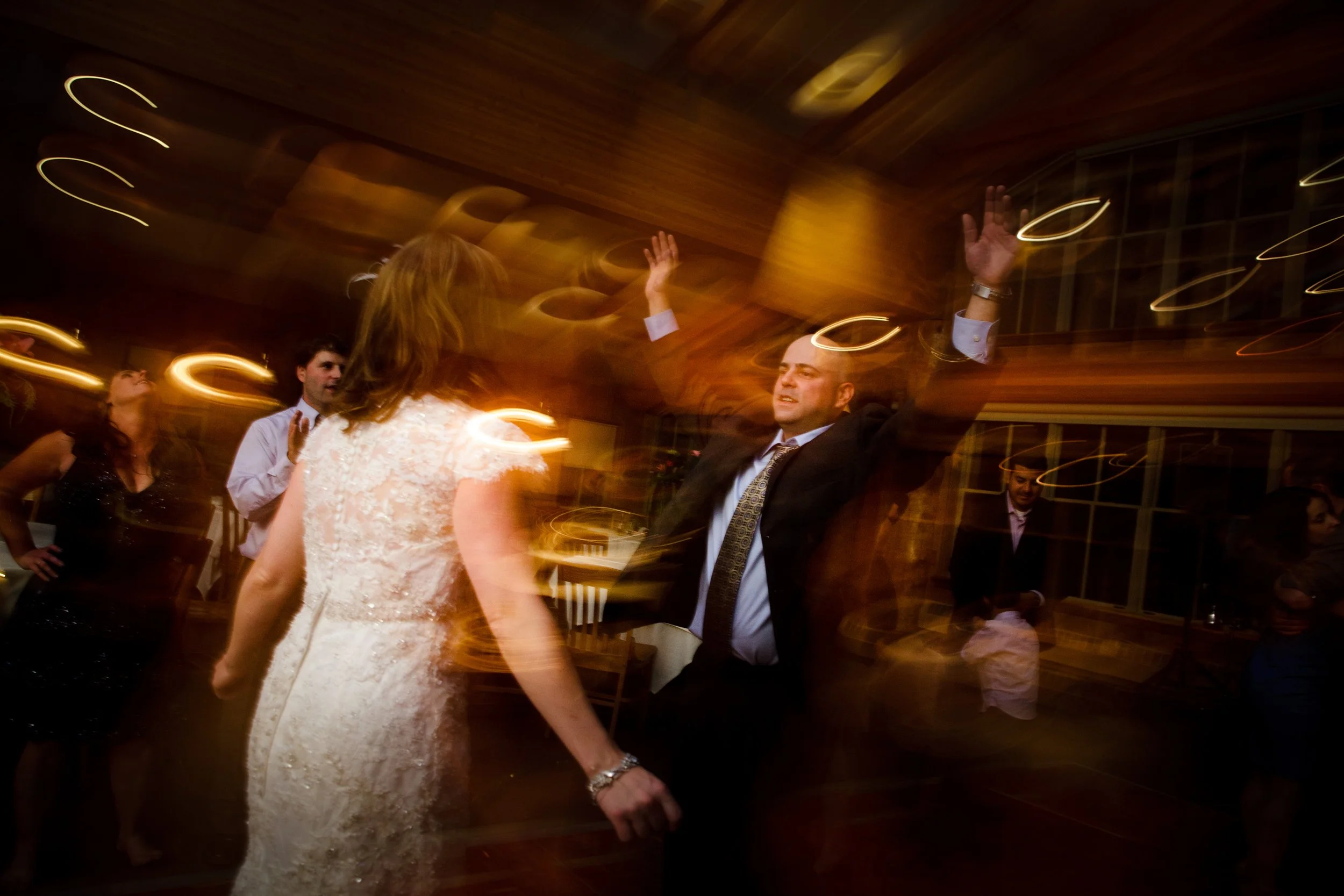
Celebration of Life Day
It’s Monday, and we’re getting ready for the gathering celebrating Josh’s life tonight.
Lots of memories.
Looking through pictures and sifting through emerging moments.
A laugh there.
A quiet word here.
“Remember when…”
And in it all, Jennie and I—and the whole family—are contained and held by the best kind of support anyone can have.
Friends just showing up.
Ben and his two daughters dropping by for a game of Crokinole.
Jim bringing dinner and hanging out, talking until 4am.
Eli and Aubree flying in for one night.
Amethyst, Porter, and Jade showing up and cooking dinner.
Tom knocking on the door and sitting next to us one morning, just bullshitting.
Tom and Chrystal bringing pizza one night.
What’s the best medicine?
Being there.
What else is there when people are grieving?
Just be there.
And remember.
Remember everything.
But especially remember the good things.